Project 3: Audio Experience for Fragrance Discovery
Concept Development, Interaction Design, Usability Testing, AI audio Creation
Overview
Online shoppers cannot smell a perfume before buying. Amodira’s royal theme and fixed collection of eight perfumes gave me a clear scope to explore scent through sound. I led concept development and interaction design, creating all eight tracks using AI. I matched sound to fragrance notes and mood, then simplified the frequency chart after usability testing. The feature became the second-most interacted element on perfume product pages, after the Back button.
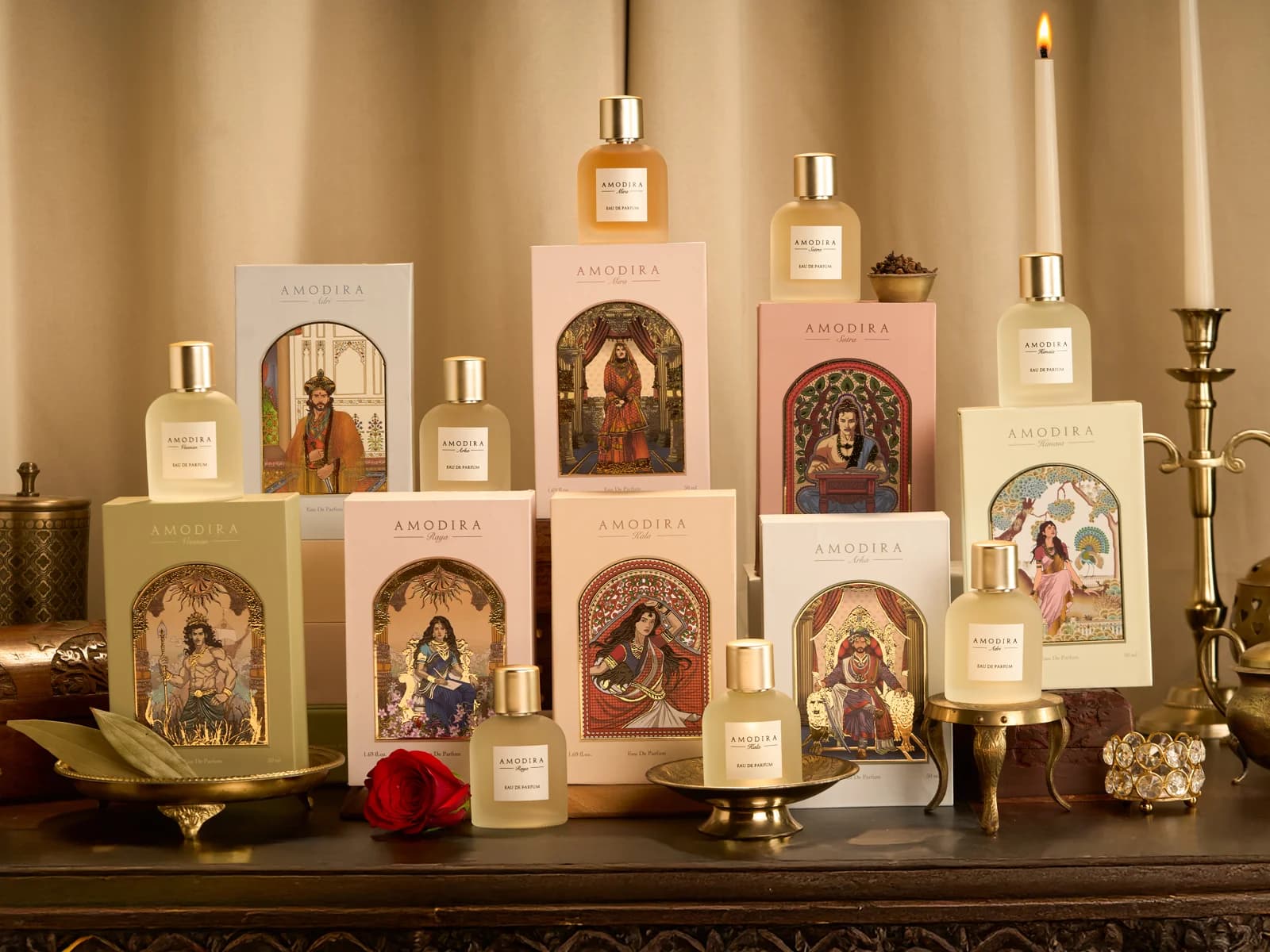
Eight perfumes. Eight distinct characters.
The challenge was to convey what made each perfume different. Each soundtrack would draw on its fragrance notes and royal story to give shoppers a sense of its character.
A perfume is more than its notes
Pictures and video set the scene. A note list might name lavender, but knowing that smell doesn’t tell you how Raya’s blend comes together. I used sound to interpret a perfume’s notes and royal story, aiming to evoke its character and mood.
- Text
- Describes the notes
- Images
- Show the product
- Video
- Sets the scene
- Sound
- Expresses character
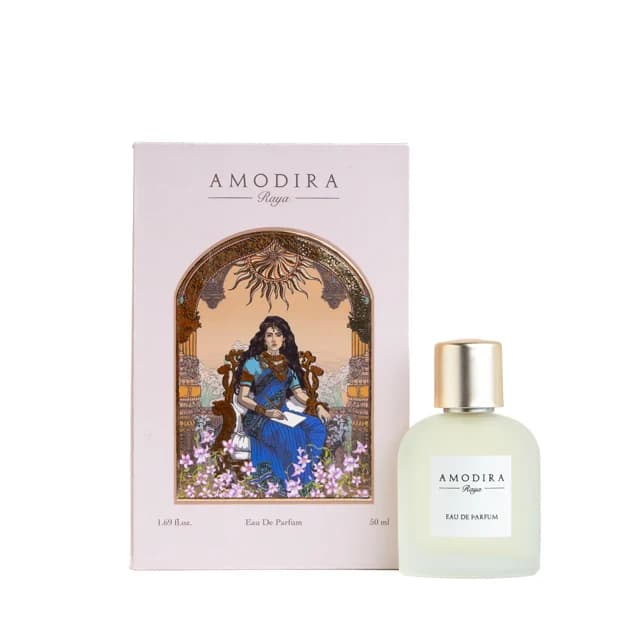 Raya
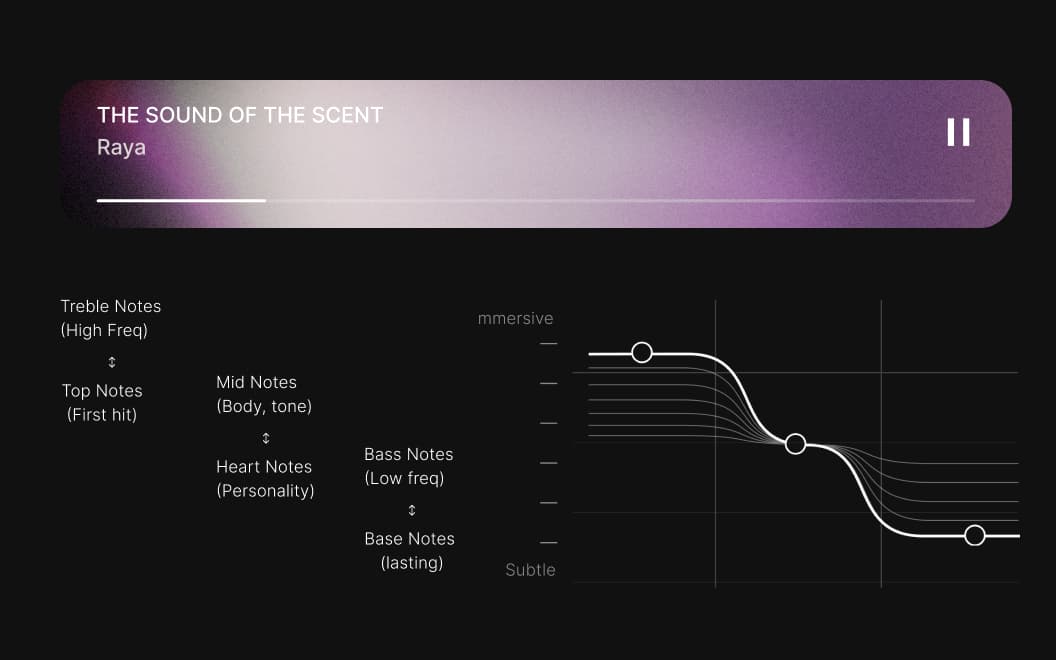
Raya- Top notesTreble
The first impression, paired with treble’s brightness and detail.
- Heart notesMids
The perfume’s character, paired with the body and tone of mids.
- Base notesBass
The lasting foundation, paired with the depth and weight of bass.
- Graceful pacing
- Reflects Raya’s calm character.
- Indian classical undertones
- Reference her cultural roots.
- Warm, blooming melodies
- Evoke the jasmine and vanilla notes.
Royal stories, made personal
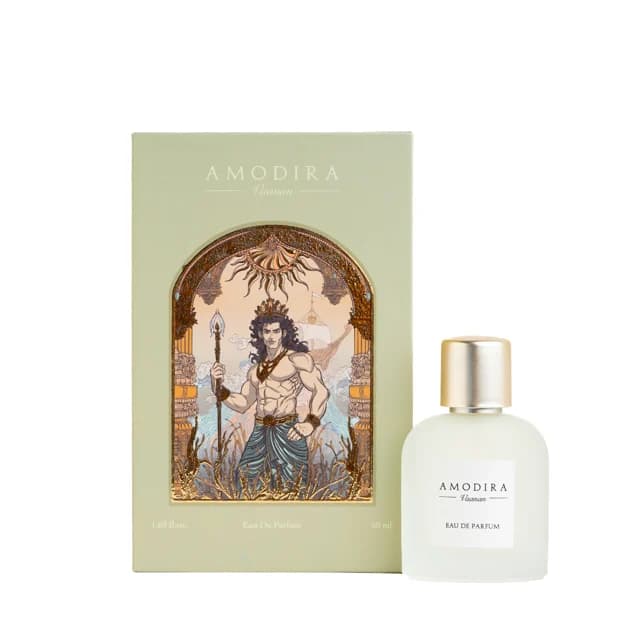
The story behind each perfume shaped its soundtrack, too. For Vaanan, heading into battle became a feeling of courage and resolve — something a wearer could carry into their day at work.
 Vaanan
- Royal storyHeading into battle
- FeelingCourage and resolve
- Everyday momentWearing the scent to work
Listen to the collection
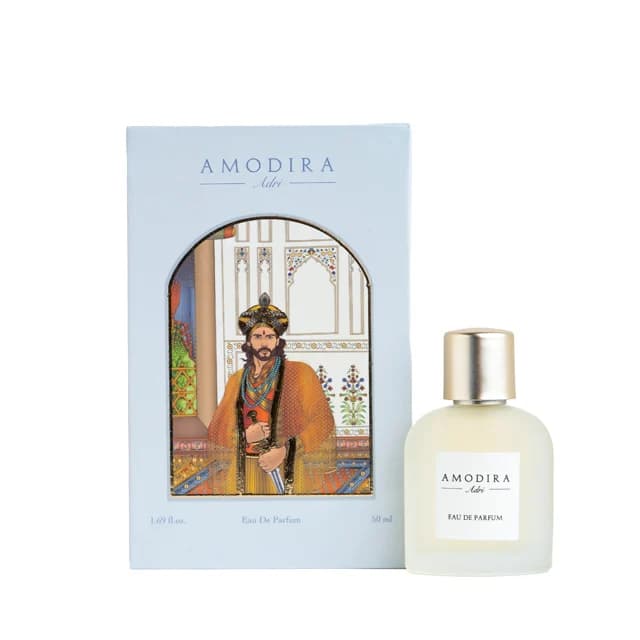
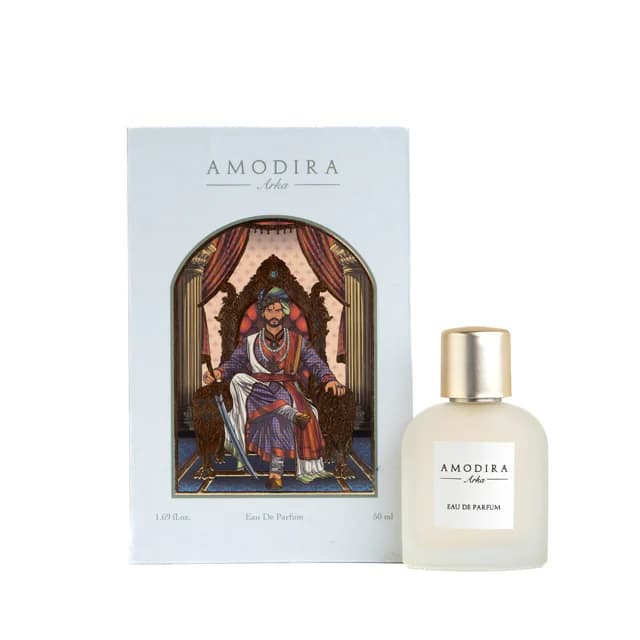
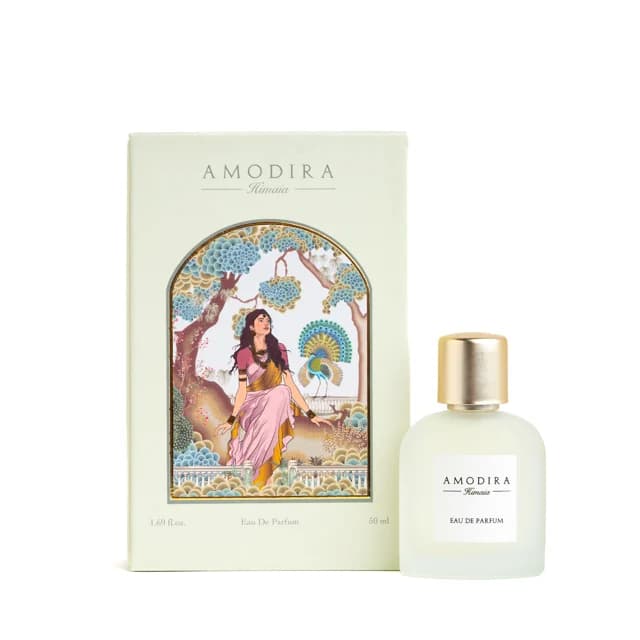
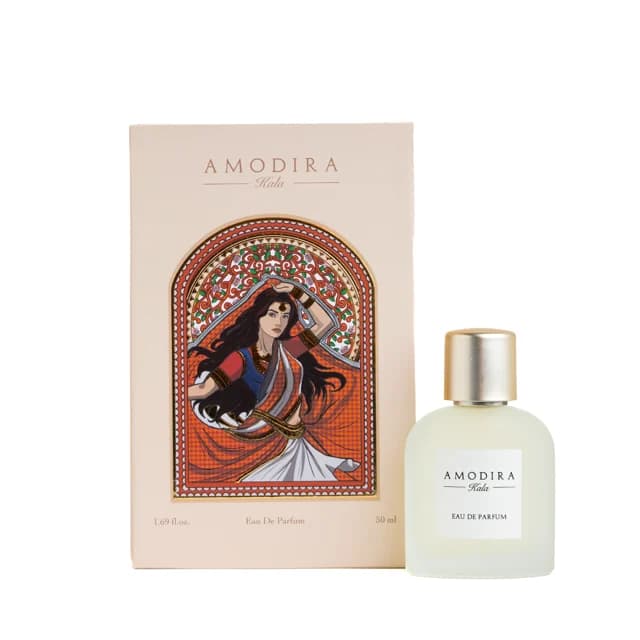
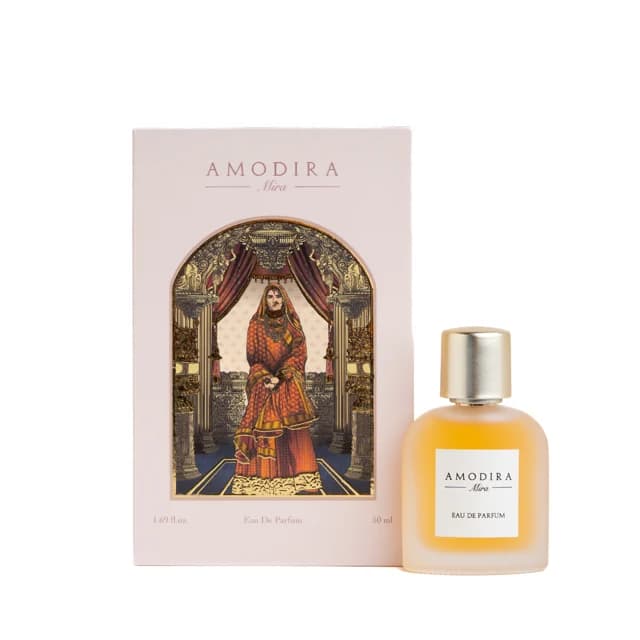
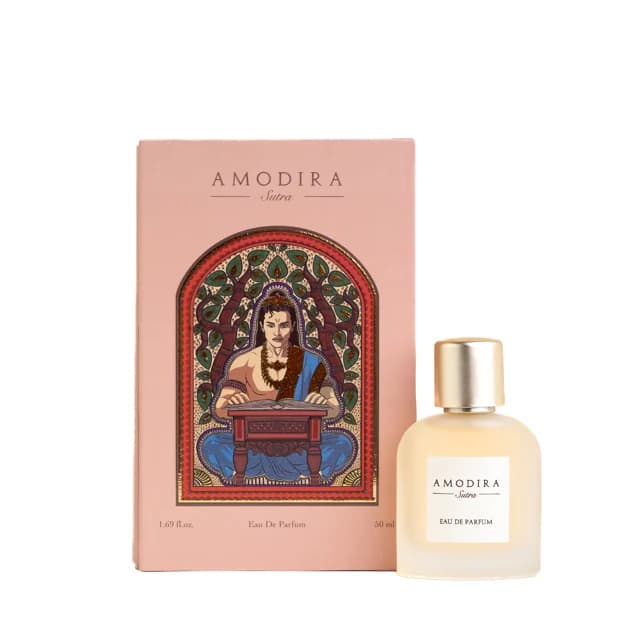
I created eight distinct soundtracks, each interpreting a perfume’s fragrance notes, royal character and mood.
- Adri
- Arka
- Himaia
- Kala
- Mira
- Raya
- Sutra
- Vaanan
A direction we didn’t take
The graph showed each musical layer’s intended emphasis. In usability sessions with women on our floor, we found that it needed explanation before people could understand it. I left it out of V1.
A simpler widget to test the concept
The concept still needed validation through a V0 pilot. Removing the graph simplified the widget and gave three short explanations more visual prominence: how the music’s pacing, undertones and melodies connect to the perfume’s character and mood.
The second-most interacted element
On Amodira’s perfume product pages, Sound of the Scent ranked just behind the Back button.
Most interacted element
after the Back button
- 01Back button
- 02Sound of the Scent
Key learnings
The mapping guided my creative choices, but the graph needed too much explanation. I learned to make the emotional connection clear and test the concept before adding detail.